en
en CS
CS SK
SK DE
DE

Antioxidants and male fertility: why more is not automatically better
Oxidative stress can sound like a problem with an obvious solution: add antioxidants. When conception is taking time, it helps to separate the biological explanation from evidence about an actual product.
Illustrative image generated with AI.
After several unsuccessful months, you find an explanation that seems refreshingly simple: oxidative stress must be the problem, so antioxidants must be the answer. It offers something concrete to do. But a plausible biological story does not tell you whether a particular supplement will help your particular situation.
A mechanism is not your diagnosis
Oxidative stress involves excess reactive substances; high antioxidant doses can disrupt cellular functions and interact with medicines. NCCIH explains the distinction.
Do not turn a general description into an explanation for your own difficulty conceiving. On a product page, identify where the discussion of biology ends and evidence about the product begins. If the second part is missing, an attractive diagram does not fill the gap.
A useful appointment question is whether there is a reason to investigate that mechanism in your case and whether doing so would change the plan. This keeps you from choosing an explanation before you know how your results should be interpreted.
Check what the study measured
The Cochrane review of male subfertility rates evidence concerning live birth as very uncertain. The available findings remain inconclusive.
When reading a study, underline the actual outcome: a laboratory marker, a semen measurement, pregnancy or live birth. These are different endpoints. Then check who participated and exactly what they received. A headline can leave out the conditions that matter most when interpreting the finding.
You do not need to become a statistician. Start by resisting the jump from “this ingredient has been researched” to “this pack will solve our difficulty conceiving”. Ingredient research also does not establish a benefit for a finished product with a different formula or dose.
Before adding another capsule
Photograph the labels of every supplement you use and write down the purpose of each. If several answers are simply “just in case”, you have a useful starting point for a pharmacist’s review. Compare recommended daily servings and named ingredients, rather than counting different product names.
If you take medicines or are considering several products, have the complete list reviewed. Discuss new symptoms with a clinician rather than deciding they are an expected reaction. Keep recommended fertility investigations on schedule. Choosing nutritional support should not become a condition you must satisfy before exploring the cause of the problem.
Choose a formula rather than a stronger promise
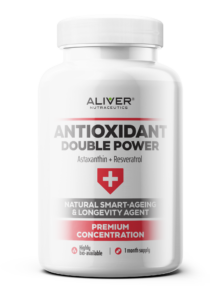
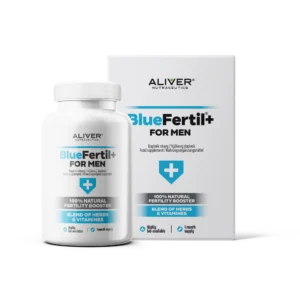
If you want to consider this specific pair of ingredients, Antioxidant Double Power contains astaxanthin and resveratrol. For broader male nutritional support, compare BlueFertil plus with vitamins C and E. The different formulas offer a more useful basis for choosing than the idea of the strongest antioxidant.
Decide whether you are interested in a specific pair of ingredients or broader dietary supplementation, then discuss that purpose with a pharmacist. Buying both is not necessary to show commitment. Have your full routine reviewed if you take medicines; combined use is not an automatic next step. Antioxidant Double Power is not intended for pregnancy or breastfeeding. Neither product is presented here as infertility treatment or a guarantee of conception. A useful purchase is one whose purpose you can explain, rather than another pack bought to insure an uncertain outcome.