en
en CS
CS SK
SK DE
DE

Choosing fertility supplements: how to read the label before the promises
A long ingredient list is not an answer to difficulty conceiving. Learn how to compare labels, identify unanswered questions and separate possible nutritional support from claims about fertility treatment.
Illustrative image generated with AI.
When pregnancy is taking longer than hoped, supplement shopping can start to resemble a competition for the longest ingredient list. One product has more ingredients, another has bigger numbers, and a third has an impressive name. Before comparing them, ask what decision you need to make: a nutritional choice, or an explanation for why conception has not happened?
Compare the same daily portion
EU rules require the recommended daily portion and a warning not to exceed it. Start there rather than on the front of the pack.
Write down the amount per capsule and the number of capsules stated for daily use. A purely mathematical example: 100 units per capsule and a two-capsule portion mean 200 units per day. This is an illustration, not dosing advice or information about an ALIVER product. Keep the unit beside every number; numbers alone cannot support a sensible comparison.
Read the whole ingredient name
Alongside the quantity, copy the full ingredient description, including its form where given. A longer chemical name is not automatically better or worse. If two labels use different descriptions you do not understand, mark them as a question for a pharmacist. That is more useful than guessing from price or packaging.
Take the same approach to extracts: record the available details without treating one impressive number as proof of superiority. Ask the manufacturer when information is missing. Do not fill a gap using the description of a different product, even if its name looks similar. Knowing what remains unverified is part of making a careful choice.
Check what the evidence actually addresses
The EU register lists authorised health claims and their conditions of use. A nutrient claim is not evidence of infertility treatment.
For any cited study, ask what was tested, in whom, and with which outcome. Research on one ingredient does not establish an effect for a finished blend. A changed laboratory measurement is also different from a demonstrated increase in pregnancy or live-birth rates. You can leave an unanswered question open; you do not have to resolve it by buying something.
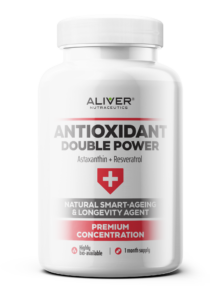
TriSenZin Triple Action and Antioxidant Double Power
For a concrete comparison, look at TriSenZin Triple Action, a men’s supplement containing Tribulus terrestris, zinc and selenium, and Antioxidant Double Power, containing astaxanthin and resveratrol. The first combines a botanical with minerals; the second has a different ingredient focus. Choose according to the nutritional question you have discussed, rather than assuming you need both. Write their daily portions beside your reason for considering each. Both are food supplements, not infertility treatments; ask a pharmacist to assess any proposed combination.
NIH notes supplement interactions with medicines and limited safety testing during pregnancy. Discuss choices professionally if pregnancy is possible; this article does not recommend herbal products during pregnancy.
Bring the complete label to a consultation and ask about any warning you do not understand. If trying is taking longer, discuss assessment rather than postponing care for another product. Reading a label well helps with a supplement decision. It cannot, on its own, explain why you have not conceived.